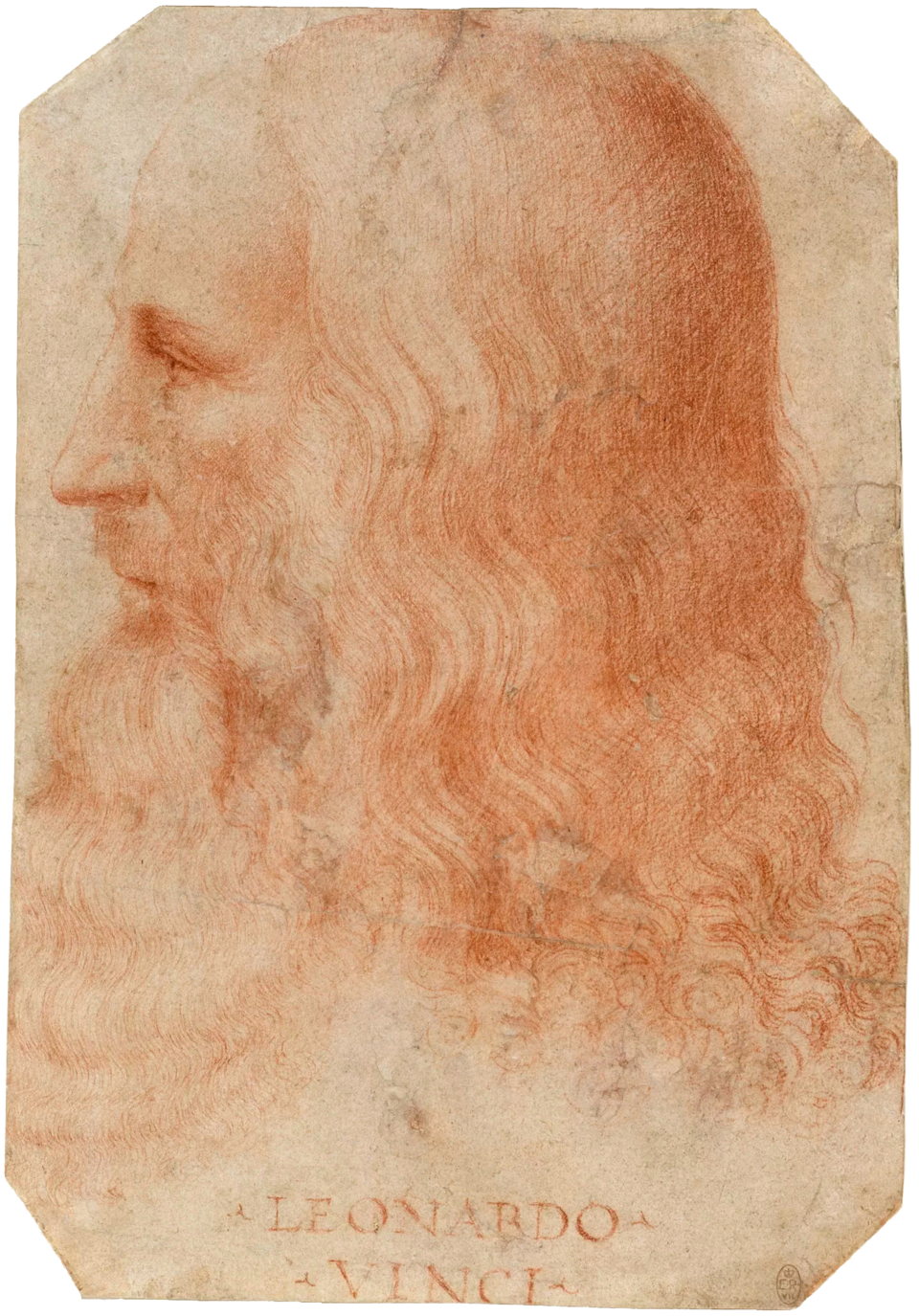
The Curious Case of Leonardo Jardim ao Vivo and Da Vinci's Annals
In an age where information is abundant yet often fragmented, it's not uncommon for searches to lead us down unexpected paths, sometimes blurring the lines between distinct historical figures and modern personalities. One such fascinating intersection, or rather, divergence, arises when searching for "leonardo jardim ao vivo" and finding oneself amidst the glorious, centuries-old narratives of Leonardo da Vinci. The immediate question arises: why would a name seemingly tied to a contemporary, "live" context be absent from the definitive histories of the Renaissance master? The answer, while straightforward, unravels a compelling story of two vastly different individuals who share little more than a first name.
The core insight, as historical records and comprehensive biographies consistently confirm, is that Leonardo da Vinci's monumental life and works – spanning art, science, and invention – contain no reference to a figure named Leonardo Jardim, nor any concept of "ao vivo" (Portuguese for "live") in the modern sense. This article delves into the precise reasons for this clear distinction, clarifying who each Leonardo is, and offering insights into how our digital searches can sometimes create an intriguing, albeit incorrect, conflation of identities.
The Tale of Two Leonardos: Disentangling Historical Figures
To understand why Leonardo Jardim doesn't feature in Da Vinci's chronicles, we must first properly introduce these two remarkable men. They hail from different epochs, cultures, and professional spheres, each leaving an indelible mark on their respective domains.
Leonardo da Vinci: A Renaissance Icon
Born in 1452 in Vinci, Italy, Leonardo da Vinci stands as one of the most iconic figures of the Italian Renaissance. His legacy is an extraordinary tapestry woven from artistic genius, scientific inquiry, and relentless innovation. Da Vinci was a true polymath, a master painter, sculptor, architect, musician, scientist, inventor, anatomist, geologist, cartographer, botanist, and writer. His artistic contributions alone are legendary, including masterpieces like the enigmatic Mona Lisa, the dramatic Last Supper, and the profoundly symbolic Vitruvian Man. Beyond art, his notebooks are filled with groundbreaking observations and designs for flying machines, weaponry, and hydraulic systems, many centuries ahead of their time.
Da Vinci's life concluded in 1519, and his history is meticulously documented in countless academic texts, biographies, and museum exhibits. His story is one of profound historical impact, shaped by the intellectual and artistic fervor of the Renaissance, leaving an enduring legacy that continues to inspire and intrigue the world.
Leonardo Jardim: A Contemporary Sporting Figure
In stark contrast to the historical grandeur of Da Vinci, Leonardo Jardim is a prominent figure in the contemporary world of professional football. Born in Venezuela in 1974 to Portuguese parents, Jardim is a highly respected football manager known for his tactical prowess and ability to develop young talent. His career, primarily in Europe, has seen him manage numerous clubs, achieving significant success.
Most famously, Jardim led AS Monaco to a stunning Ligue 1 title in the 2016-2017 season, breaking Paris Saint-Germain's dominance and reaching the semi-finals of the UEFA Champions League with a team featuring future stars like Kylian Mbappé, Bernardo Silva, and Fabinho. His managerial approach often emphasizes disciplined defense, swift counter-attacks, and a strong collective team spirit. His presence in the football world is very much "ao vivo" – seen live on television broadcasts, followed through real-time match reports, and discussed in immediate post-game analyses. He is a modern professional, operating in an industry driven by live performance and instant communication.
Why "Leonardo Jardim ao Vivo" is Absent from Da Vinci's Records
The fundamental reason for the absence of any mention of "leonardo jardim ao vivo" in historical records concerning Leonardo da Vinci boils down to several critical distinctions:
- Temporal Impossibility: The most obvious factor is the sheer chronological gap. Leonardo da Vinci lived from 1452 to 1519. Leonardo Jardim was born in 1974. There's a span of nearly five centuries between their active lives, making any interaction or co-existence utterly impossible. Da Vinci's historical accounts naturally end with his passing in the early 16th century, long before Jardim's birth.
- Professional Disparity: Their fields of endeavor are entirely unrelated. Da Vinci was a multifaceted genius focused on art, science, and invention, driven by curiosity and intellectual exploration. Jardim is a specialist in professional sports management, operating within the highly competitive world of football. Their contributions, while significant in their respective spheres, belong to completely different paradigms of human achievement.
- Context of "Ao Vivo": The term "ao vivo" (live) is central to the distinction. For Leonardo Jardim, "ao vivo" signifies his active, present-day involvement in football matches, press conferences, and media appearances. He is a public figure whose work is consumed live by millions. For Leonardo da Vinci, the concept of "live" in this modern media sense did not exist. His work was documented through direct observation, apprenticeships, letters, and eventually, historical records. His "life" is historical; Jardim's is contemporary.
- Nature of Documentation: Da Vinci's history is preserved through academic scholarship, art history, scientific analysis of his works and writings, and archival research. Jardim's career, conversely, is chronicled through sports journalism, live broadcasts, club histories, and digital media – all reflecting a modern, fast-paced information ecosystem. These distinct modes of documentation naturally separate their narratives.
Attempting to find "leonardo jardim ao vivo" within texts about Leonardo da Vinci is akin to searching for a modern rock concert in a medieval illuminated manuscript – the contexts are simply incompatible. For a deeper dive into how these live contexts differ, you might find Leonardo Jardim Live: Distinguishing From Da Vinci Content to be particularly enlightening.
Navigating Information: When Your Search Blurs Boundaries
The scenario of encountering "Leonardo da Vinci" when explicitly searching for "leonardo jardim ao vivo" highlights a common challenge in our digital age: the vastness of information and the nuances of search algorithms. Here are some practical tips and insights for navigating such situations:
- Be Specific with Keywords: While "Leonardo" is a shared name, adding more descriptive terms can significantly refine your search. For Da Vinci, keywords like "Leonardo da Vinci art," "Renaissance painter," "Mona Lisa," or "inventor" will yield precise results. For Jardim, use "Leonardo Jardim football manager," "AS Monaco," "Sporting CP," or "coach" to narrow down your focus to his sporting career.
- Understand Search Intent: Before typing, consider what specific information you're truly seeking. Are you interested in historical art, or contemporary sports? Clarifying your intent helps in crafting more effective search queries.
- Analyze Search Results Critically: When results appear unexpected, take a moment to evaluate the source and context. Are you looking at a reputable history site for Da Vinci, or a sports news outlet for Jardim? The domain and type of website often reveal which "Leonardo" is being discussed.
- Utilize Quotation Marks: To search for an exact phrase, enclose it in quotation marks (e.g., "Leonardo Jardim ao vivo"). This tells the search engine to look for those words together in that specific order, which can help eliminate tangential results.
- Leverage Contextual Clues: Notice surrounding words or imagery. Pictures of paintings or historical sketches clearly point to Da Vinci, while images of football pitches, team logos, or managerial lineups indicate Jardim.
The phenomenon of similar names causing search confusion is an interesting byproduct of how information is indexed and retrieved. Understanding this can empower you to find exactly what you're looking for, rather than being sidetracked by fascinating but irrelevant content. To explore this further, you can read Searching 'Leonardo Jardim ao Vivo': What Context Reveals, which delves into how context shapes our search outcomes.
Conclusion
In conclusion, the absence of "leonardo jardim ao vivo" from the histories of Leonardo da Vinci is not an oversight but a logical consequence of their distinct identities, eras, and professions. Leonardo da Vinci, the quintessential Renaissance polymath, is a towering figure of history whose genius shaped art and science for centuries. Leonardo Jardim, a modern-day football manager, is a prominent figure in the dynamic, live world of professional sports. While they share a celebrated first name, their narratives are centuries apart and belong to entirely different cultural and professional landscapes. Recognizing this fundamental separation not only clarifies potential search ambiguities but also allows for a deeper appreciation of each man's unique contributions to humanity, in their own time and context.